Loading...
Serving Crown Point, IN and surrounding areas. (219) 900-8772
Building a deck, garage, or addition? Footings are what keep it level and stable through Crown Point winters. We dig to the correct frost depth, pull permits, and get the concrete right the first time.
Concrete footings in Crown Point are the buried pads of concrete that hold up everything above them - a deck post, a garage wall, a home addition - dug to the local frost line and poured to the size required for the load, with most residential projects completed in a single day of digging and forming before concrete is placed.
If you are planning to build something structural - a deck, a detached garage, a room addition, or a carport - footings are almost certainly part of the job. In Crown Point, where the ground can freeze more than three feet deep in a hard winter, footings that do not reach below that frost line will shift with every freeze-thaw cycle and push the structure above them out of level. Getting this step right from the start is what keeps a deck or addition stable for decades. If your project is also connected to a larger concrete scope, our foundation installation work handles more complex structural concrete needs alongside standalone footings.
We handle the full footing process - site assessment, permit application, utility coordination, excavation, forming, pour, and inspection sign-off. You get a written estimate and a clear timeline before anything starts.
If a deck post is no longer vertical, or the deck surface has developed a noticeable tilt, the footing beneath that post may have shifted. In Crown Point, footings that were not buried deep enough are a common cause of this movement - the freeze-thaw cycle pushes shallow footings upward over multiple winters. This is not just cosmetic: a leaning post means the structure above it is no longer supported the way it should be.
Diagonal cracks running from the corners of a slab, or cracks along the base of a garage wall, can signal that the footing beneath has moved or settled unevenly. Crown Point's clay soils expand and contract with moisture changes, which gradually shifts footings that were not designed with local conditions in mind. A site assessment can determine whether the footing is the source of the problem.
Any time you are adding a deck, garage, room addition, pergola, or carport, footings are almost certainly required. If a contractor quotes you for one of these projects and does not mention footings or a permit, that is worth asking about directly. Getting the foundation step right is what keeps the new structure stable and prevents costly repairs within the first few years.
If you can see the top of a concrete footing and it looks crumbled, cracked, or has chunks missing, it may no longer be doing its job. Concrete poured decades ago - common in Crown Point's older neighborhoods - can degrade over time, especially if it was exposed to repeated freeze-thaw cycles near the surface. Replacing a deteriorated footing before building on top of it is far less expensive than fixing structural damage later.
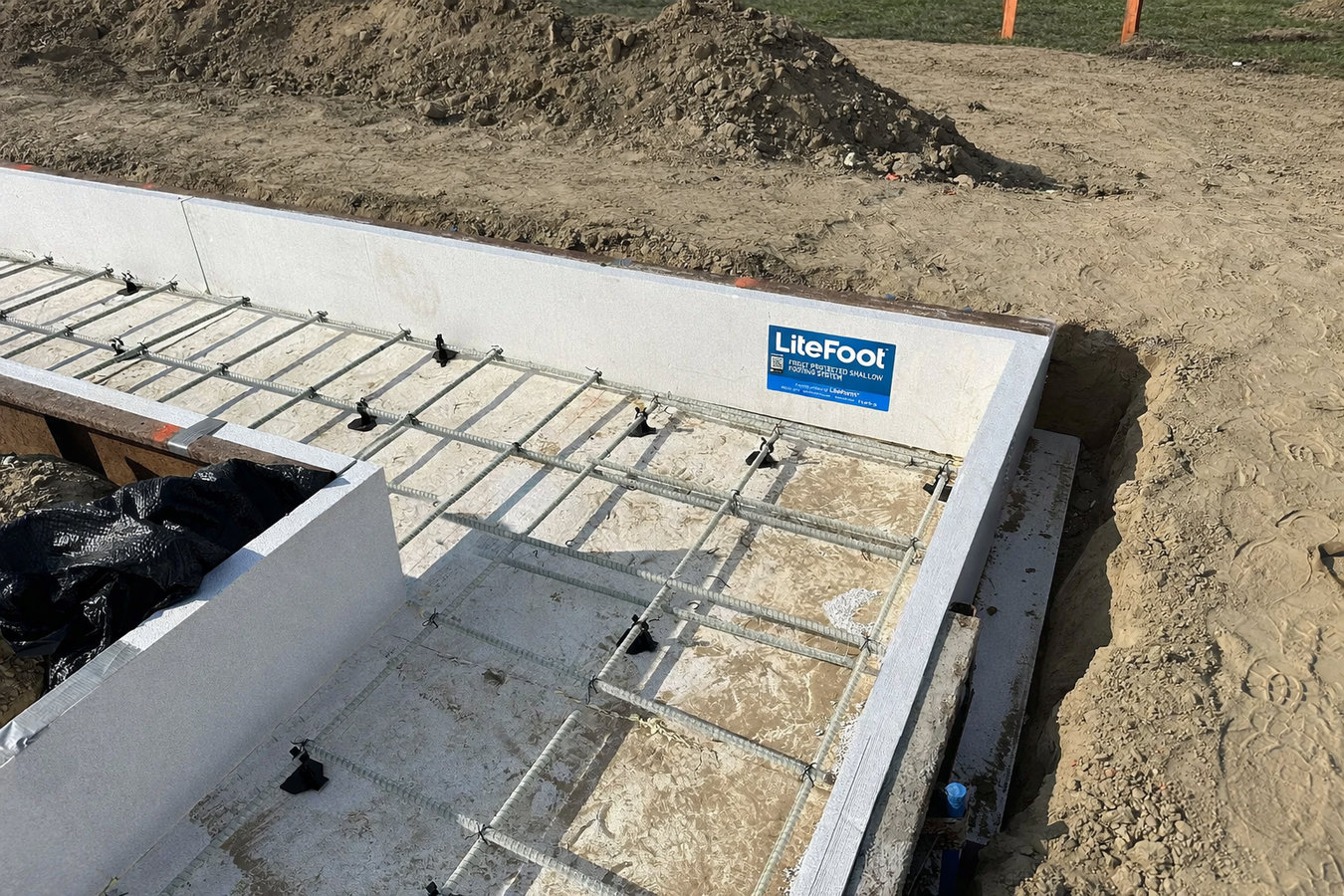
Every footing project starts with a site visit to assess soil conditions, confirm the correct depth for local frost requirements, and size the footings appropriately for what will sit on top of them. In Crown Point, that means digging to around 36 to 42 inches in most cases - deep enough to stay below the frost line even in a hard Lake County winter. We set temporary forms to shape the concrete, place steel reinforcement where required, and pour to a level that meets both the project requirements and the Crown Point permit specifications. The foundation raising work we do is a close companion service for homeowners dealing with existing structural movement alongside new footing needs.
We pull the required building permit through the Crown Point Building Department and coordinate the pre-pour inspection - a step that gives you independent, documented confirmation the work was done correctly before concrete is placed. After curing, we walk the site with you and let you know when it is safe to begin the next phase of your project. For the work you cannot see after it is done, the permit record is your protection.
For homeowners adding a new deck or replacing footings under an existing one that has shifted - includes frost-depth excavation and pre-pour city inspection.
For detached garages, workshops, and accessory structures that need a proper perimeter footing system before framing begins.
For room additions, sunrooms, and front or rear porches that require footings tied into or adjacent to an existing foundation.
For older Crown Point properties where existing footings have deteriorated and need to be removed and replaced before new construction begins on top of them.
Crown Point and the surrounding Lake County area sit on clay-heavy glacial soils that hold water and shift with the seasons. That soil behavior is one of the biggest factors in how footings perform over time here. Concrete poured into clay soil without proper drainage or adequate sizing is under constant pressure - the ground around it swells when wet and contracts when dry, pushing and pulling on the footing year after year. The Indiana Department of Homeland Security Building Safety Division sets the standards that local building departments enforce - and those standards exist because of conditions exactly like these. A contractor familiar with Lake County's soil does not treat footing design as an afterthought.
Northern Indiana winters mean the ground can freeze to 36 to 42 inches deep in a hard year - deeper than most people expect. Any footing that does not reach below that depth is vulnerable to frost heave, where the freezing soil lifts the footing upward and tilts whatever is built on top. We see the consequences of shallow footings regularly when working across the region, including in Portage and Hobart where the same frost-depth requirements apply. Getting the depth right from the start costs little extra and saves a great deal later.
We respond within one business day. We will ask what you are building, roughly where on your property, and whether you have spoken with the city about permits yet. Most projects get a firm written estimate after a short on-site visit.
We visit your property, assess soil conditions, confirm the correct depth and sizing for your project, and apply for the Crown Point building permit. Permit processing usually takes a few days to a couple of weeks - we factor this into your timeline upfront so there are no surprises.
Before any digging, we coordinate with Indiana 811 to have underground utility lines marked. The crew then excavates to the required frost depth, sets forms, and places steel reinforcement where the project calls for it. Digging and forming for a typical residential deck can usually be completed in a single day.
A city inspector visits before concrete is poured to verify depth and dimensions - this is your independent confirmation the work meets local standards. After the inspector approves, we pour and level the concrete. Your contractor will let you know the specific waiting period before the next phase of your project can begin.
Free on-site estimate. We handle permits, utility coordination, and the pre-pour inspection - you focus on your project.
(219) 900-8772We know that Crown Point requires excavating to around 36 to 42 inches to stay below the frost line. That depth requirement is not a recommendation - it is the standard for northern Indiana, and we treat it as non-negotiable on every footing project we take on.
Every footing project we complete goes through the Crown Point Building Department permit and pre-pour inspection process. That inspector visit before concrete is poured is independent verification that the depth and dimensions are correct - the kind of documentation that protects you long after we leave the job site.
The clay-heavy soil common throughout Lake County requires a different approach to footing sizing and drainage than firmer ground. We assess soil conditions on every site visit and design footings that account for the expansion and contraction that local soils go through with every wet and dry season.
Spring footing season in Lake County is busy - schedules fill quickly once the weather turns. We give you a written estimate and a realistic start date early in the process so your deck or addition stays on track, not pushed to fall because permits and scheduling were left too late.
Footing work is the step that determines whether everything built on top of it stays level and safe through decades of Indiana winters. We take that part of the job seriously so the rest of your project goes the way you planned it.
Correcting settled or shifted foundations in Crown Point - including the structural lifting and support work that follows footing failures.
Learn MoreFull foundation systems for new construction and major additions in Crown Point, built to handle Lake County soil and frost conditions.
Learn MoreSpring schedules fill fast in Lake County - reach out now to get permits started and lock in your build date before the busy season peaks.